Contactless Payment trends for 2026 in unattended environments
 1 min read
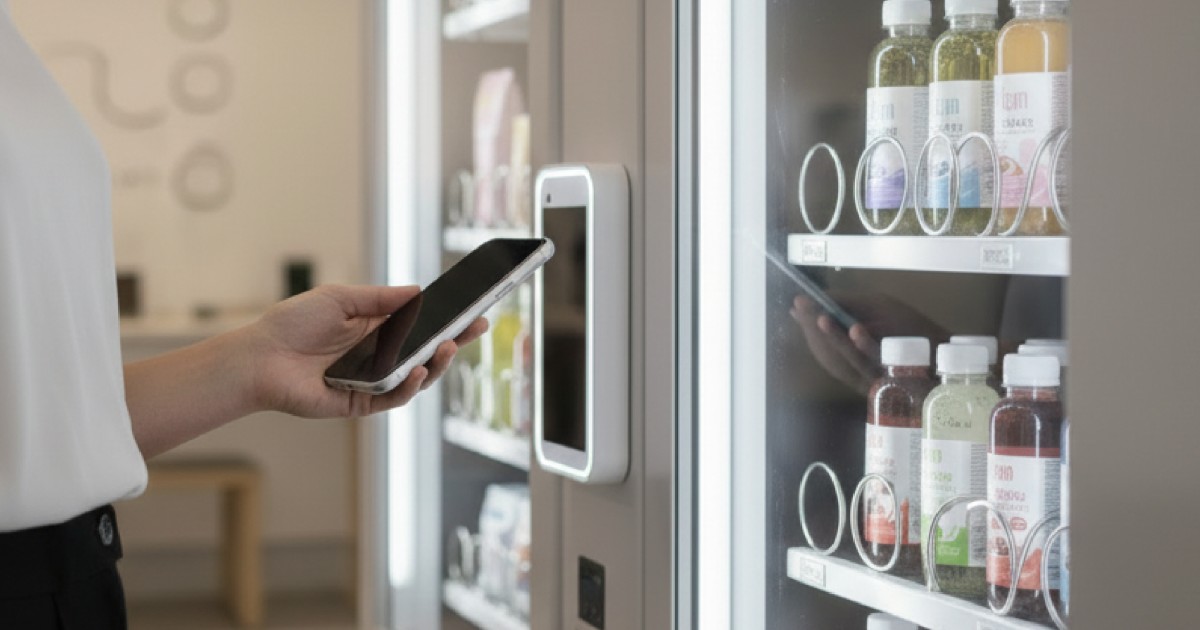
Contactless payments have become the preferred payment method across many industries. Looking ahead to 2026, this evolution will continue, but with an important nuance: the impact of contactless payments will go far beyond technology and will directly affect user experience, repeat usage, and business management in unattended environments.
Self-service machines, 24/7 vending, car wash facilities, laundromats, amusement and arcade machines, EV chargers, and coffee machines all share the same challenge: delivering a smooth payment experience, where every interaction matters.
In this article, we explore the key contactless payment trends for 2026, focusing on their real impact on unattended environments and how operators can prepare for what’s coming next.
Contactless payments are now the standard in unattended environments
One of the clearest trends for 2026 is that contactless payments are no longer a value-added feature but a standard expectation. For users, being able to pay by card or mobile is no longer a competitive advantage; it’s simply what they expect.
According to several Visa studies, more than 70% of in-person transactions in Europe are already made using contactless payments, a figure that continues to grow, especially in fast-consumption contexts and unattended points of sale.
In these environments, where there is no staff to assist users, payment ease and reliability become critical factors. Any friction has a direct impact on the experience and on the decision to use the machine again.
The rise of mobile payments and wallets in self-service environments
The growth of mobile wallets such as Apple Pay, Google Pay, and Samsung Pay is one of the strongest trends set to consolidate by 2026.
The Worldpay Global Payments Report 2024 highlights that payments made through mobile wallets continue to gain share over physical cards, driven by convenience, speed, and seamless integration into users’ digital ecosystems. This trend is especially relevant in public and self-service environments, where the smartphone is often the primary device.
For self-service machine operators, this means adapting to users who no longer carry cash and expect to pay directly from their mobile devices—quickly and without unnecessary steps.
When payments stop differentiating and start creating value
By 2026, contactless payments will increasingly become a commodity. Paying by card or mobile will no longer differentiate a business; it will simply be the norm.
The real differentiation will come from what is built around the payment. In unattended environments, the payment moment is one of the few points of interaction with the user, and making the most of it can make a real difference.
This is where tools that go beyond simple payment acceptance come into play, such as balance management, incentives, and features designed to enhance the experience and encourage repeat usage. Payment stops being the end goal and becomes the starting point.
Payment, experience, and management: an increasingly integrated approach
Another clear trend for 2026 is the integration of payment systems with user experience and operational management. Operators are no longer looking only to collect payments—they want visibility, control, and tools that simplify daily operations.
Payments thus become a key source of insight to understand user behavior and optimize point-of-sale management.
Flexibility and reliability as essential requirements
The diversity of payment methods will continue to grow depending on country and context. For this reason, flexible and adaptable payment systems will be essential for scaling without friction.
At the same time, payment system reliability and stability will be critical. In unattended environments, every incident means a lost sale and a poor user experience. By 2026, ensuring that the payment system is always operational will be just as important as the payment method itself.
What operators should consider for 2026
In this context, self-service operators should be asking themselves:
- Is my payment system aligned with current user habits?
- Is the payment process truly smooth and reliable?
- Am I using the payment moment to create value beyond the transaction itself?
- Do I have tools that help me manage my operations more efficiently?
Answering these questions will be key to staying competitive in the coming years and to offering loyalty tools that turn occasional users into long-term customers.
Conclusion: the future of contactless payments in unattended environments
Contactless payment trends for 2026 point to a clear scenario: payments will be increasingly standard, digital, and expected by users.
In unattended environments, the competitive advantage will not lie in simply accepting contactless payments, but in how those payments are used to improve the experience, drive repeat usage, and simplify business management.
Understanding this evolution allows operators to anticipate market changes and build more sustainable models—where payment is no longer the end goal, but the starting point for a more complete and profitable experience.
Want to go beyond payments and turn contactless transactions into a tool to improve experience and repeat usage in unattended environments?
Discover how Frekuent helps you build value around every transaction.
It's not about this sale.
It's about the next.
Scale your business by turning more visitors into regulars with the help of Frekuent. Get in touch to find out how you can get growing.
The real-time data and inventory tracking have made our processes smoother and more efficient. Definitely a must-have for growing businesses!
One of our clients say...