POS Terminal for Unattended Businesses: What It Is, Types and How to Choose the Right One
 5 min read
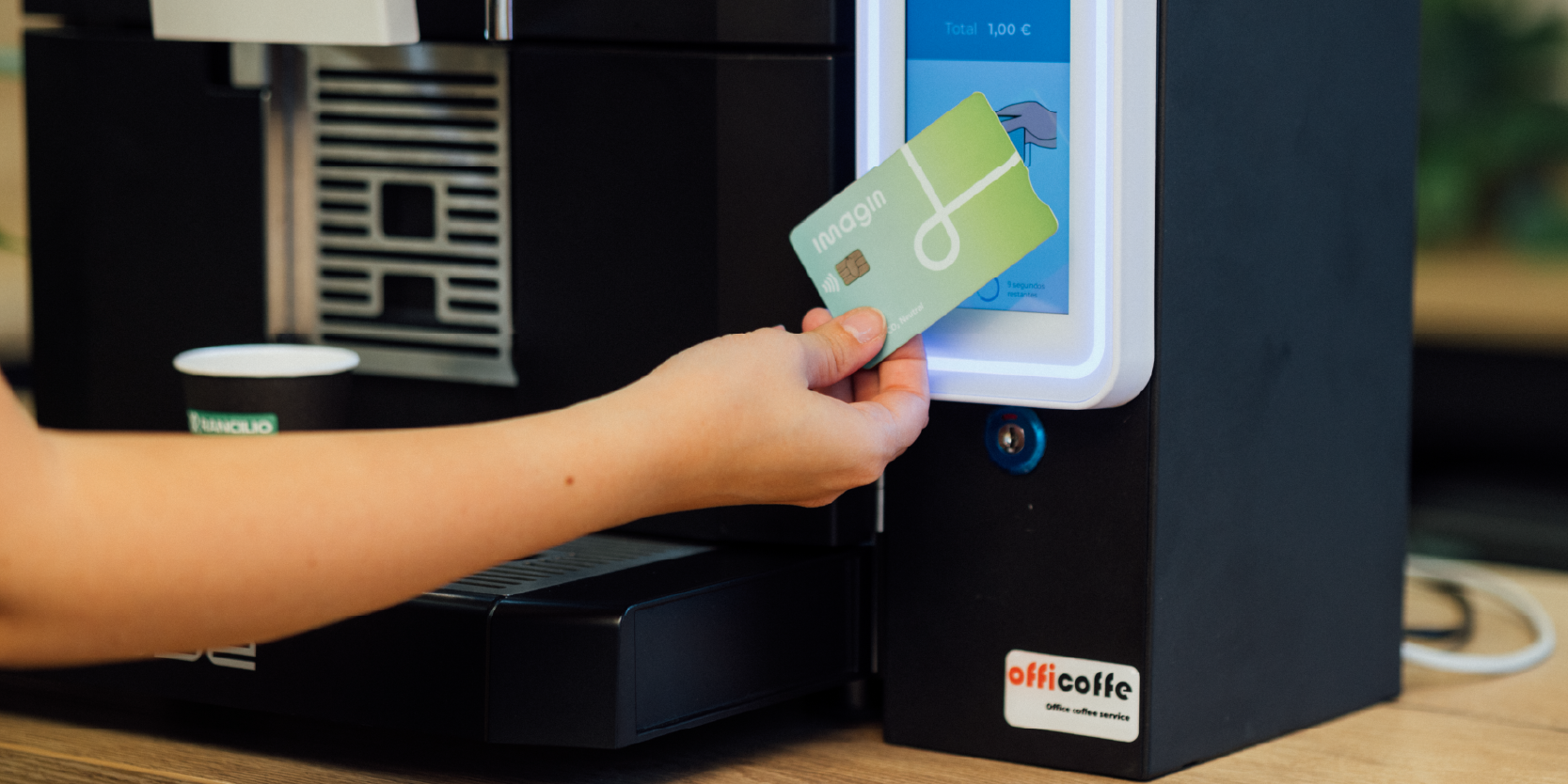
Most people searching "what is a POS terminal" are thinking about a shop. But operators of unattended businesses have a different question: what type of POS terminal works inside a machine with no staff, no fixed connection, and at a location nobody visits every day? The answer is not the same as for a café or a retail store.
What is a POS terminal?
POS stands for Point of Sale. A POS terminal is the system — hardware plus software — that manages the payment process at the moment a customer pays. It is not just the card reader: it also includes the software that records the transaction, generates the receipt, and sends the data to the operator's management system.
In a staffed business, a POS terminal might be a touchscreen till, a wired card reader, and management software on a computer. In an unattended business — a vending machine, a self-service laundry, or a service station — the POS terminal has to operate on its own, autonomously, with no one supervising it.
POS terminal vs card reader: they are not the same thing
This is the most common source of confusion, and it's worth clearing up before going further.
| Card reader | POS terminal | |
|---|---|---|
| What it is | A device that processes card payments | A complete point-of-sale management system |
| What it does | Authorises and records the transaction | Takes payment, records, reports, manages inventory and customers |
| Can it work alone? | Yes, but only for taking payment | Yes, and it also gives visibility into the business |
| In unattended environments | Not sufficient on its own | Essential for operating with real control |
A card reader can be part of a POS terminal, but it does not replace one. In unattended environments, operating with only a card reader means taking payments with no visibility into what is happening across your machines. A complete POS terminal gives you payment plus management.
Types of POS terminal: what exists and what each one is for
Traditional fixed POS
Touchscreen display, card reader, receipt printer, and till software. The standard in shops, cafés, and restaurants. Requires a member of staff to operate. Not suitable for unattended environments.
Mobile POS
Portable device with built-in connectivity, no cables required. Useful for markets, events, and businesses on the move. Also not designed to operate without anyone present.
Virtual POS
Cloud-based software for accepting payments online or by phone. No physical hardware. Aimed at ecommerce and remote billing. Does not apply to physical machines.
Unattended POS (IoT POS)
This is the type that vending, laundry, and service station operators need. It installs directly into the machine, operates on its own connectivity (SIM), accepts all contactless payment methods, and is managed remotely from a centralised dashboard.
Its specific features set it apart from every other type:
- EMV L1, L2, and L3 certification to operate without a member of staff
- Native integration with machine protocols (MDB, Executive)
- Autonomous connectivity — does not rely on the venue's WiFi
- Built-in screen to display the amount, QR code, and payment confirmation
- Remote management: the operator monitors machine status without visiting
Frekuent Spot is this type of POS. It installs in under 30 minutes on any machine, with no rewiring or additional cabling, and TIM 5G connectivity is included in the subscription.
What payment methods does an unattended POS terminal accept?
The minimum standard in 2026 for an unattended environment is:
- Contactless debit and credit card — Visa and Mastercard
- Apple Pay and Google Pay
- QR code payments — particularly useful in environments with a loyalty app
- NFC tags — for corporate environments using wallet cards
- Payment app — for recurring customers on a points programme
A POS that only accepts chip+PIN or magnetic stripe is a liability in unattended: it forces the customer to insert their card, adds friction, and reduces conversion. Contactless removes that step entirely.
How much does a POS terminal cost for unattended businesses?
There are two very different cost models in the market:
| Model | How it works | Estimated real cost |
|---|---|---|
| Device purchase + commission | You buy the hardware (~€400) and pay a commission on every transaction (typically 3%) | €400 upfront + variable commissions + hidden rounding |
| Monthly subscription, no commission | You pay a fixed monthly fee. Hardware is included. | From €17.65/month — no commission up to €400/month or 250 transactions per device |
With Frekuent's subscription model, the operator does not need to purchase hardware, pays no transaction commission up to the threshold, and receives daily settlements — not the 30-day hold that some providers apply.
POS terminal and remote management: why they go together in unattended
An unattended POS terminal makes no sense without a remote management system behind it. Without visibility, the operator has no way of knowing whether a machine is running, whether there is a payment issue, or how much each point of sale has generated.
With Frekuent Space, the management dashboard included with every Frekuent Spot, operators can:
- See every transaction per machine in real time
- Receive automatic alerts if a device stops operating
- Check revenue by period, location, or device
- Configure promotions and pricing per machine without travelling to site
- Export reports for accounting or corporate clients
POS plus remote management is what allows an operator to scale their fleet without adding headcount. One machine becomes ten, ten becomes one hundred — without the operational burden growing at the same rate.
How to choose the right POS terminal for your unattended business
Five questions that structure the decision:
1. Is it compatible with your machine protocol? Confirm the device supports MDB, Executive, or whichever protocol your machines use. Without native compatibility, installation becomes complicated.
2. Is connectivity included? Some devices require the operator to manage a SIM separately. With Frekuent, TIM 5G connectivity is included in the subscription.
3. How long does installation take? In unattended, every hour a machine is down is revenue lost. Frekuent Spot installs in under 30 minutes.
4. Does it include a remote management dashboard? Without remote visibility, the POS only solves payment. To operate efficiently, you need real-time data and automatic alerts.
5. How does settlement work? Check the timeline. Some providers hold payments for 30 days. Frekuent settles daily.
Frequently asked questions about POS terminals for unattended businesses
Can I use a standard bank card terminal on my vending machines?
No. Conventional bank card terminals are designed to be operated by a member of staff and have no integration with machine protocols (MDB, Executive). For unattended environments you need an EMV-certified IoT POS with native machine integration.
What happens if the POS loses its connection?
A good unattended POS has an offline mode that stores transactions locally and processes them when connectivity returns. Frekuent Spot includes TIM 5G connectivity with coverage across Spain and Italy, which drastically reduces connection dropouts.
Can the POS also manage product pricing?
It depends on the system. With Frekuent Space, operators can configure prices, promotions, and discounts per machine directly from the dashboard — no site visit required.
How many machines can I manage from a single dashboard?
With Frekuent Space there is no operational limit. Operators with fleets of thousands of devices manage their entire operation from one dashboard, with role-based access for different teams: operations, finance, marketing, and technical.
Do I need a contract with a bank to install a POS terminal?
With Frekuent, no. The platform manages the entire relationship with the card networks. You do not need to negotiate with acquirers or set up a separate merchant account.
Want to find out which POS terminal fits your machine type and how many devices you need?
Tell us how your business operates and we'll tell you exactly what you need — no commitment required.
It's not about this sale.
It's about the next.
Scale your business by turning more visitors into regulars with the help of Frekuent. Get in touch to find out how you can get growing.
The real-time data and inventory tracking have made our processes smoother and more efficient. Definitely a must-have for growing businesses!
One of our clients say...